

Is Fuel Subsidy Back in Nigeria? The Truth About Petrol Discounts
The federal government says its latest petrol price relief howbeit small is not a subsidy. The opposition disagrees. The former Vice President and one of the presidential candidates for the 2027 elections even went as far as calling the federal government out on the matter. He was reportedly vehement in maintaining that the old regime of subsidy has been restored. He maintains his stand that he will restore subsidy on fuel if elected come 2027.
Given all this back-and-forth on subsidy between the FG and the opposition parties, what does the research say about subsidy—and who actually benefits?
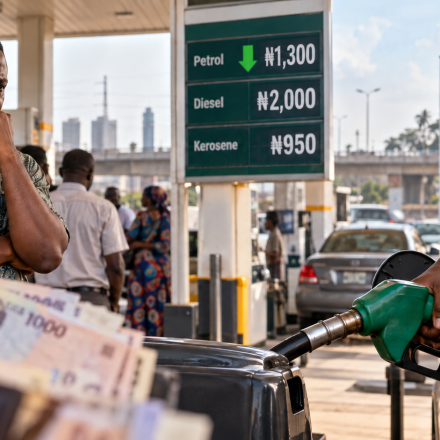
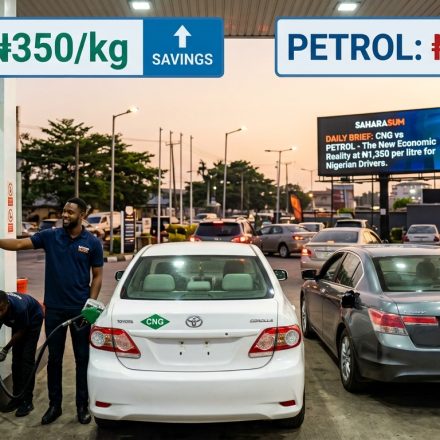
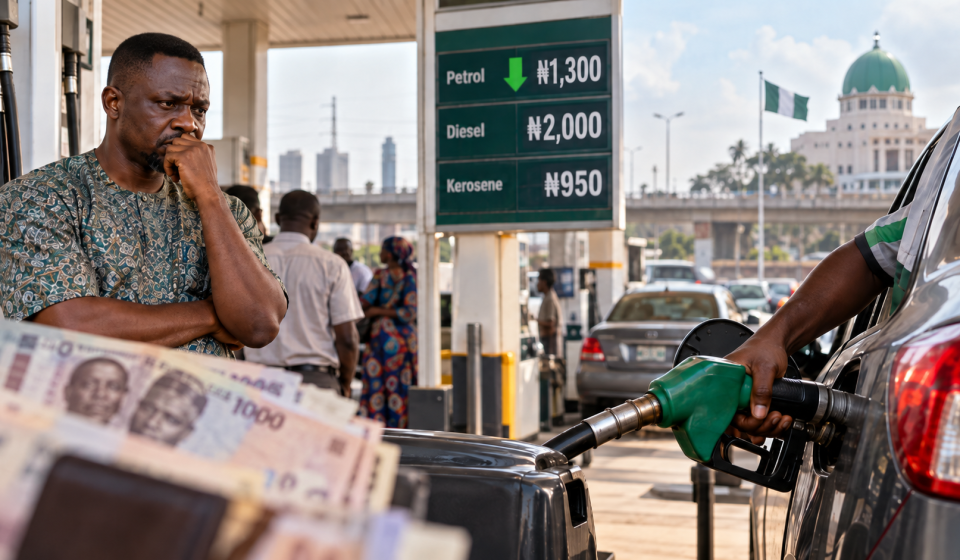
Imagine driving into a NNPC filling station and discovering that petrol costs less than you expected say =N=1,290 per litre (i.e., =N=60 less). With fuel prices climbing and household expenses getting harder to manage, that sounds like a welcome news, right?
Well, not everyone is celebrating.
In the last few days, debate has been intense over what the 30-day discount the FG offers motorists on petrol through the Nigerian National Petroleum Company Limited (NNPCL). The opposition says the FG new arrangement amounts to bringing back the fuel subsidy that President Bola Tinubu removed in May 2023. The government says otherwise. Both sides are talking about cheaper petrol, but they disagree about what makes that petrol cheaper and who pays for the difference.
The disagreement comes as Nigerians continue to grapple with high fuel costs, which have reportedly risen further since the outbreak of the US-Iran conflict in February 2026.
So is the discount really a subsidy? Will it make life easier for struggling Nigerians? And, perhaps more importantly, does research suggest that subsidising petrol is the best way to help people who need it most?
Several studies on fuel subsidy reforms offer some surprising answers.
Is the NNPC petrol discount actually a subsidy?
That all depends on what you mean by subsidy.
According to the federal government’s reported explanation, the NNPCL discount does not involve the use of public money. Instead, the company is supposed to absorb the cost from its profits. Technically, the FG is saying that the discount offers to motorists on fuel by NNPCL is the profit it would have made from the sale of such fuel.
The government’s argument seems straightforward. If the NNPC pays for the discount out of its incomes, rather than receiving money from the federal budget, then the old subsidy arrangement has not returned.
But the opposition sees it from a different perspective. Its concern is that asking a government-owned company to sell petrol below the price it would otherwise charge amounts to subsidising consumption, regardless of whether the money comes directly from the treasury.
Here’s the distinction. Under a conventional government-funded subsidy, public resources cover some of the cost of making petrol cheaper for consumers. Under the arrangement described by the federal government, NNPCL would instead accept lower profits or no profit at all to offer motorists a discount.
But what If a government-owned company earns less because it sells petrol more cheaply? Does not the public ultimately bear part of that cost?
The government gave its position on the source of funding. It does not, by itself, settle the wider economic question of whether the discount represents an indirect public subsidy.
To answer that, Nigerians would need to know how much the discount costs, how it affects NNPCL’s incomes and whether the company would otherwise have retained or transferred those profits.
READ ALSO: Fuel Under-Dispensing in Nigeria: Research Exposes How Motorists Are Cheated at Filling Stations
The information presented so far does not establish those figures. And the explanation given by the Minister of Finance, Mr. Taiwo Oyedele didn’t cover that part. And that matters because a discount can feel good at the filling station while raising much bigger questions about government finances.
Why did Nigeria remove fuel subsidies in the first place?
When President Tinubu removed the petrol subsidy in May 2023, the economic case for the decision rested heavily on the money the government could save.
Instead of spending enormous sums keeping petrol prices artificially low, those resources could potentially support infrastructure, education, healthcare and other public services.
In the same vein, ending subsidies could reduce opportunities for smuggling of subsidized fuel out of the country to neighbouring countries, inflated import claims and other practices that had allowed some businesses and politically connected interests to benefit from the system.
But what happens when the money is saved and ordinary people still struggle to make ends meet?
That question was central to a 2026 study by John Moses Maikomo, Jessey Dearsley Dabale, James Bawa Auta and Hero Bitrus Bravo, researchers from the Department of Political Science and International Relations at Taraba State University in Jalingo.
Their study, published in the ADSU International Journal of Social Sciences, examined Nigeria’s subsidy reform using economic and policy information from 2022 through 2025.
The researchers drew on institutional reports from organisations including the Central Bank of Nigeria, National Bureau of Statistics, World Bank, International Monetary Fund and Federal Accounts Allocation Committee. They also examined issues such as the distribution of government resources, poverty and the possibility that politically powerful groups could capture the benefits of reform.
From their research, they found that the financial gains for government were substantial. But the consequences for households and the wellbeing of the citizens told a rather different story.
How much money did the government gain from subsidy removal?
The government makes quite a lot from subsidy removal according to the figures presented in the Taraba State University research. Monthly FAAC allocations increased from approximately ₦695 billion in 2022 to more than ₦1.6 trillion in 2024 which is an increase of over 132%. The study also reported more than ₦7.5 trillion in savings associated with the post-subsidy period.
Those impressive numbers help explain why governments may be reluctant to return to expensive fuel subsidies.
But larger government allocations are not the same as greater purchasing power for citizens. The researchers reported about everyday living costs.
According to the research, transportation costs rose by more than 200%, headline inflation exceeded 33%, and food inflation moved beyond 40% during the period examined. The study also reported substantial erosion of real wages and an estimated 14 million additional people falling into poverty.
These findings do not establish that subsidy removal alone caused every one of those developments. The research also considered currency depreciation and wider economic pressures as also responsible for these negative developments.
The meaning here is: Government revenues improved while many households experienced severe pressure on their living standards.
Are Nigerians worse off without fuel subsidies?
Research suggests that the removal had serious consequences for household expenses, particularly when other economic pressures are taken into account.
In a 2025 study titled Impact of Fuel Subsidy Removal on the Cost of Living in Nigeria, Oluseye Ajuwon of the University of Lagos and Kareem Jelili Abiodun examined the relationship between subsidy removal, inflation and living costs.
Their findings indicated a significant relationship between subsidy removal and increases in living costs and inflation. The authors reported a modelled effect of 73.8% associated with a unit change in subsidy removal.
That figure is a study-specific statistical result, not a claim that every Nigerian household’s expenses increased by exactly 73.8%.
The researchers also highlighted how Nigeria’s headline inflation climbed from 28.9% in December 2023 to 34.19% in June 2024, alongside rising fuel and food prices and currency depreciation.
They recommended that the Government should cushion the effects on individuals, households and businesses through palliatives and other welfare-enhancing measures.
In a similar study, Arinze Emmanuel Okonkwo and Jane C. Ezenwegbu examined the removal of petrol subsidies and its implications for democratic governance.
They acknowledged the potential advantages of subsidy removal as fiscal savings, investment opportunities and support for domestic refining.
But they also found that adequate measures had not been put in place to protect ordinary Nigerians against the policy’s negative effects. The researchers regarded reform as potentially beneficial, provided the government managed the proceeds prudently and distributed the benefits fairly.
In other words, removing a subsidy may be economically defensible. Leaving vulnerable households without sufficient protection is a different matter.
Do fuel subsidies actually help poor people?
A cheaper price at the pump does not necessarily mean that the poorest Nigerians receive the greatest benefit. This is because households that consume more petrol generally receive more of the total price benefit.
Someone who buys large quantities of petrol receives more support through a universal price discount than someone who purchases very little. And this creates an uncomfortable contradiction.
A programme designed to help poor households can end up delivering more financial assistance to people who are already better off.
The research also highlights the concern that broad fuel subsidies can encourage smuggling, arbitrage and inflated claims, allowing some commercial and political interests to capture resources intended for the wider population. Although the Minister of Finance boldly claimed that such would never happen regarding this discount because it is relatively small.
But removing those subsidies introduces a different problem. Even households that do not buy much petrol can suffer when transport fares rise and businesses pass higher distribution and operating costs on to consumers. Low-income earners, informal-sector workers and women can be particularly exposed because transport and basic energy costs account for significant portions of their incomes.
So keeping petrol cheap may distribute benefits inefficiently. Removing support without protecting vulnerable households can deepen hardship. And neither outcome is especially reassuring.
So who is right—the government or the opposition?
The available research helps explain the economic consequences of subsidies, but it does not establish the precise financial treatment of the newly announced NNPCL discount.
The federal government may be correct that the arrangement does not involve a direct payment from the national budget. But funding a discount from the earnings of a publicly owned company does not automatically mean the arrangement has no economic cost to the public.
Equally, the opposition’s description of the discount as a return to subsidy cannot be fully established without examining how the arrangement is financed and accounted for.
Both arguments therefore depend on information that needs to be disclosed. But there is, however, a separate question on which the studies offer clearer guidance.
Will the discount help Nigerians?
Motorists who buy discounted petrol will pay less than they otherwise would. But the extent of that relief depends on the discount’s size, how much petrol people purchase and whether any savings affect their wider household expenses.
The research does not establish how much the new arrangement will reduce inflation, transport fares or poverty. And even if the discount produces some immediate relief, that does not necessarily make it the most effective way to protect low-income households.
The bigger issue is whether the government’s intervention reaches the people experiencing the greatest financial pressure. A cheaper tank of petrol is one thing. A meaningful improvement in the cost of living is quite another.