




Fuel Under-Dispensing in Nigeria: Research Exposes How Motorists Are Cheated at Filling Stations
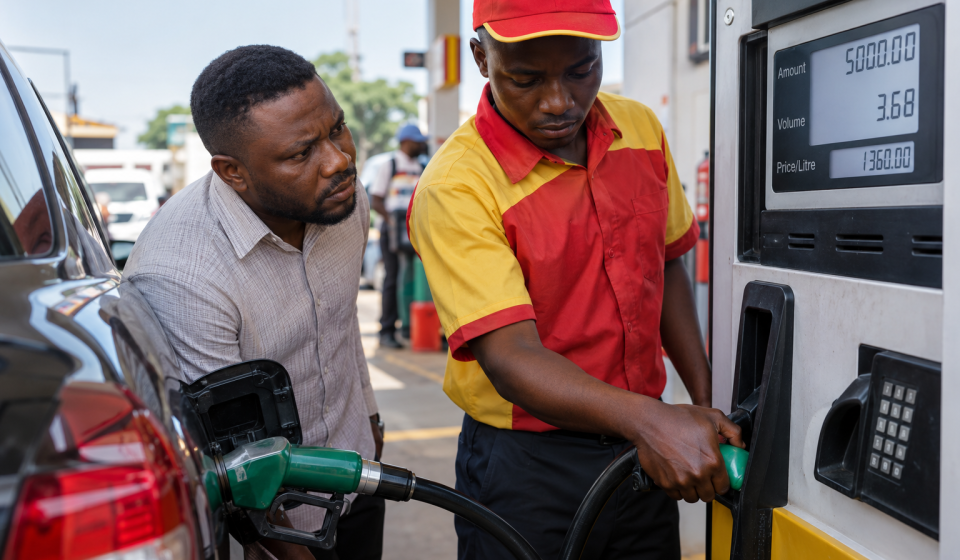
You got to a filling station in the morning on your way to work, paid money for 20 litres of petrol. But did 20 litres of fuel actually enter your car tank?
The Nigerian Midstream and Downstream Petroleum Regulatory Authority (NMDPRA) reportedly put that question back in the spotlight recently after uncovering incidents of under-dispensing at filling stations across the country. The regulator ordered retail outlets across the country to check and calibrate their dispensers and totalisers, warning that stations caught short-changing customers could face sanctions, including losing their licences.
That may sound like a problem for the regulators and filling station owners. But think about what it means for your wallet. Think about how much you have lost so far ignorantly and may lose going forward if you did not arm yourself with the requisite knowledge. Remember the regulators cannot be at all filling stations in the country at the same time. Neither do they have enough resources to even attempt to be at just 1% of the filling stations in the country simultaneously.
For you to understand what we are driving at; let’s do it this way. Let’s say you pay for 30 litres of fuel at ₦1,360 per litre at a filling station. You expect 30 litres to enter your tank, right? But what if the petrol station attendant dispenses only 25 litres into your car tank though the meter shows 30 litres?
You’ve paid for five litres of fuel you never received.
And if it happens again next week? And the week after that? Suddenly, a few missing litres at the pump stop looking so small. At ₦1,360 per litre, is costing you ₦20,250 weekly, ₦81,000 monthly and about ₦1,053,000 in a year. Wow!
But under-dispensing may be more complicated than simply having a dishonest attendant standing beside your car.
Research conducted in Ogun State, Nigeria by Bolawale Abayomi Odunaike on Socio-Economic Relationships and Sharp Practices in Petroleum Products Retail Outlets found two broad types of sharp practices at petroleum retail outlets. There are practices organised at the filling-station level by the management and practices carried out by the petrol station attendants while serving customers. In other words, a consumer could potentially face trouble before the attendant even touches the nozzle, and then face another set of tricks during the actual sale. The research seems to imply that we might even be losing more than the estimate given earlier on.
Filling stations’ management tricks to watch out for
What are the filling stations’ management tricks to watch out for?
The answer begins inside the pump. It starts with what happens before you arrive at the filling station.
Believe it or not, some of the tricks described in the study involved changing how the dispensing equipment (i.e., the fuel pump) itself worked.
One method was meter manipulation.
Some dispensers examined in the research contained controls that could alter the amount of fuel dispensed or released. Adjusting the mechanism in one direction could increase the volume dispensed, while adjusting it in the other direction could reduce it. Because the relevant mechanical parts were normally locked away, an ordinary customer standing beside the pump would have little opportunity to see what had been changed.
And that wasn’t the only method.
There was also something called “dry calibration.”
Fuel dispensing machines could be accessed through calibration codes, according to pump engineers interviewed for the study. Different dispenser brands had different codes, and engineers accumulated knowledge of those codes. Once the correct settings were accessed, the amount delivered by the dispenser could be altered.
But what if the calibration code wasn’t available?
There were other ways.
There was the manipulation of solenoid valve.
The study described manipulation of the solenoid valve, a component controlling the flow of fuel in the dispensing machine. Part of the valve could be obstructed to interfere with the amount of fuel moving through the dispenser, thereby reducing the quantity dispensed. In other cases, components of a pump could be changed to make the machine easier to manipulate.
In the same vein fuel pipes could be deliberately obstructed.
This is a less obvious problem. It is a less obvious method of swindling motorists at the filling stations of their hard-earned money. The pipe connecting the underground tank to the dispensing machine could be tampered with.
Normally, the line or pipe should be positioned so that it retains fuel all through to the nozzle. If it is improperly slanted, however, space can develop inside the line. The dispenser or pump may then begin registering a sale while part of the fuel movement is simply filling that empty space in the pipe. For the driver watching the numbers climb on the screen, everything may appear normal but the tank tells a different story.
The filling stations attendants’ tricks to watch out for
The Ogun State research identified a second category of sharp practices that occurred during the interaction between attendants and customers. Unlike equipment manipulation carried out at the station level by the management, these methods could depend on distraction, display screens and the customer’s failure to follow the sale from beginning to end.
Here is how it starts. You pull into a filling station, tell the attendant how much fuel you want and reach for your phone. Maybe you reply to a message. Maybe someone in the car starts talking to you. Maybe you look away for only a few seconds.
That may be enough.
At the simplest of these sharp practices involved the use of previous customer’s sale.
Normally, lifting the nozzle for a new sales transaction should clear the earlier sale on the meter. But the research described a way of hanging the nozzle that allowed the dispenser to remain active, meaning a new transaction could continue from the previous reading rather than starting afresh.
If you aren’t watching when the attendant begins? You may never notice. And you may for it.
That is why seeing zero on the display before dispensing begins matters.
But the screen itself creates another opportunity.
The researchers described a trick involving zeros and decimal points. An attendant could take advantage of a distracted or confused customer by making one figure appear to represent another. Customers who could not distinguish clearly between the currency and litre displays were especially vulnerable.
READ ALSO: Dangote Refinery IPO: Did Investors Make Money From Other Dangote Stocks?
And two-unit dispensers created yet another possibility.
Because two displays can sit beside each other, an attendant could stop a transaction when the amount on the neighbouring display happened to resemble what the customer expected to see. The customer sees the requested sales transaction figure and assumes it belongs to the fuel that just entered their vehicle.
The study recorded a name attendants used for this trick: “leg-over.”
But one of the most interesting tricks involved something you probably do all the time. Buying fuel in round amounts.
Why could ₦5,000 be riskier than ₦5,120?
Fuel dispensers can retain records of previous sales. According to the research, attendants could recall a past transaction matching the amount requested by a new customer. Some attendants reportedly made the process easier by writing down recent sales and referring to those records. That means frequently requested amounts such as ₦1,000, ₦2,000 or ₦5,000, for example—could be easier to match.
The suggested defence against this trick was surprisingly simple. Always buy irregular amounts of fuel such as ₦1,050, ₦3,750, and ₦5,620. A petrol station attendant looking for a convenient previous transaction amount such as these would be much less likely to have that exact figure waiting in the machine’s recent-sales history.
Who gets cheated the most?
You might assume that commercial drivers would be the easiest targets. After all, they buy fuel constantly. However, the study found something more surprising.
Private vehicle owners could get the worst deal.
Some filling stations separated customers among different pumps. commercial vehicles are filled at one, people buying into containers at another and private motorists at another. Researchers observed that pumps serving commercial drivers tended to perform better, followed by pumps serving people buying fuel in containers. The poorest dispensing was associated with pumps serving private vehicles.
Why?
Because some customers have an easier way of knowing when something is wrong. A commercial driver knows roughly what a certain quantity of fuel should do for the vehicle. Someone carrying a calibrated container can physically see whether the expected volume has been supplied.
But when petrol disappears directly into your vehicle’s tank, how precisely can you measure what just went in? That makes the private motorist an easier target.
Did I hear you say ‘thank God’ because you’re not a private motorist?
And then there’s geography.
The researchers examined filling stations in Abeokuta, Sagamu and Idiroko, all in Ogun state, Nigeria. Their observations using calibrated containers found shortages of roughly one to two litres for every 20 litres dispensed in Abeokuta and Sagamu. In Idiroko, most stations observed were short by about three litres per 20 litres, while some reached four litres.
Of course, that’s not a tiny difference.
If you pay for 20 litres and receive only 16 litres, you have lost one-fifth of what you bought. A loss of ₦5,440 at ₦1,360 per litre. That’s, you pay ₦5,440 for ignorantly trusting the filling station.
And perhaps the most surprising part? The research found that the problem was not simply about whether a station belonged to a major marketer or an independent operator. Consumer experiences in Abeokuta and Sagamu were similar across those categories, while the more severe manipulation observed in Idiroko was associated with the station’s geographical location.
So choosing a familiar-looking filling station may not solve the problem.
In fact, appearances created another problem entirely.
Some independent stations were reported to use names, colours, uniforms and logos resembling those of better-known outlets, particularly along expressways. Consumers unfamiliar with the area could drive in believing they had recognised a trusted station, only to realize afterward that they had mistaken it for another brand.
But manipulated equipment is only half the story. Because even if you arrive at the pump after the machine has been adjusted, the person holding the nozzle may still have a few tricks of their own. And some of those tricks depend on one very simple thing: You are not paying attention.
So what can you actually do about it?
First, watch the pump before the sale starts.
Make sure the previous transaction has been cleared and the display begins from zero at both the currency and litre displays.
Then keep watching.
The study specifically emphasised customer concentration because tricks involving zeros, decimal points and the distinction between litres and naira depend partly on the customer failing to follow what is happening on the display.
Buying an irregular naira amount may also make the past-sales trick more difficult.
And when you buy fuel in a container, using one with a known capacity gives you something a vehicle tank normally doesn’t which is an immediate physical check on volume.
There is another reason to stay alert when travelling.
A filling station may look familiar without actually being the company you think it is. The study recorded experiences involving stations whose names, colours, uniforms or logos resembled major outlets closely enough to mislead passing motorists.
But does all this mean every filling station is cheating customers?
The research cannot establish that.
The study was qualitative and concentrated on three Ogun State locations namely Abeokuta, Idiroko and Sagamu. Its methodology included interviews with filling-station owners, managers and attendants, pump engineers and regulatory officials, as well as focus-group discussions with consumers and observations at selected filling stations.
Therefore, its findings reveal methods, experiences and patterns within the places studied rather than a precise nationwide percentage of dishonest stations.
That distinction matters.
What else does the researchers find?
Consumers in the study did not necessarily know all the methods being used against them. Even when they suspected they had been cheated, they tended to attribute the problem to a bad meter or an attendant failing to reset the dispenser. Some of the equipment-level techniques were much harder for an ordinary motorist to identify.
And scarcity could make things worse.
Participants reported additional practices during periods of fuel shortages, including extra levies, rotational station operations and suspected adulteration of products. In other words, shortages did not create every form of pump manipulation described in the study; they added other problems to practices consumers were already experiencing. Which brings us back to that recent regulatory warning.
Conclusion
NMDPRA says consumers must receive the quantity of petroleum products they paid for. It has ordered stations to calibrate and verify their dispensers and totalisers, with sanctions possible for outlets found under-dispensing.
For regulators, that means checking the machines.
For motorists like you, there are things to watch too.
Look at the display before dispensing begins.
Follow it until the sale ends.
Know whether you are looking at litres or naira.
Consider irregular purchase amounts.
Pay closer attention to unfamiliar stations whose branding merely looks familiar.
Because the most expensive litre of petrol may not be the one whose price has just gone up. It may be the litre you paid for but never received.
Action point
Have you ever suspected that a filling station gave you less fuel than you paid for? Maybe your tank emptied unusually quickly, or the pump reading simply didn’t add up. The research reveals some surprising tricks, but we want to hear about your own experience.
Have you ever caught an attendant cheating, or discovered a filling station that consistently dispenses less fuel? What happened, and how did you handle it?
Share your experience in the comments below. Your story could help other motorists recognize the warning signs and avoid losing money at the pump.